Ingredients
Method
Boil the Potatoes
- Place the 900g whole, unpeeled potatoes in a large pot, cover them with cold water by about 3cm and salt the water generously. Bring to a boil, then simmer for 25–35 minutes depending on size, until a knife slides into the largest potato easily with no hard centre. Start checking at 25 minutes, because potatoes taken past tender split their skins and turn waterlogged. While they cook, make the tamarind chutney, green chutney and yogurt topping so every component is ready before the tikkis are shaped. Drain the potatoes immediately once tender. That cooking in their skins is what keeps the flesh genuinely dry, since peeled, cut potato absorbs water directly and gives a mixture that cracks and sticks in the pan.
Make the Tamarind Chutney
- Soak the 60g seedless tamarind and the dates in the 250ml hot water for 15 minutes. Mash them well with a fork, then strain through a sieve into a small saucepan, pressing hard to extract as much pulp as possible, and discard the fibres and solids. Add the 40g jaggery or brown sugar, the ½ tsp roasted cumin powder, the ½ tsp Kashmiri chilli powder, the ¼ tsp black salt and the ½ tsp regular salt. Simmer over low heat for 8–12 minutes, stirring now and then, until slightly thickened and glossy. It should coat a spoon lightly but still pour easily; if it turns sticky, stop at once. Cool fully. That restraint matters because the chutney thickens further as it cools, and a syrupy reduction sits heavy and cloying over the yogurt.
Make the Green Chutney
- Place the 40g cilantro, the 15g mint leaves, the 1–2 green chillies, the small garlic clove, the 10g ginger, the 1 tbsp lemon juice, the ½ tsp roasted cumin powder, the ½ tsp sugar and the ½ tsp salt in a small blender jar. Add 2 tbsp of the cold water and blend, scraping down the sides, until smooth. Add up to 2 tbsp more water only if the blades cannot move. The chutney should be spoonable and hold a soft mound, never watery or runny. Taste and adjust the salt, lemon or chilli, then cover and chill. That genuinely thick consistency is what lets each dollop sit on the tikki, since a thin chutney runs straight off and waters down the whole plate.
Whisk the Yogurt Topping
- Whisk the 400g plain full-fat yogurt with the ½ tsp sugar and the ¼ tsp salt until completely smooth. Add 2 tbsp cold water or milk and whisk again, then add up to 2 tbsp more only if the yogurt still feels stiff. It should be creamy and pourable but still thick, flowing slowly off a spoon in a ribbon. If it sits in clumps, whisk in a little more liquid; if it begins to run freely, stop adding any. Taste it: the yogurt should be lightly seasoned, never dessert-sweet. Cover and chill until needed. That slow-flowing consistency is what lets the yogurt drape over the tikkis in a cool layer instead of clumping on top or flooding the plate.
Steam-Dry and Mash the Potatoes
- As soon as the drained potatoes are cool enough to handle, peel them while still warm, when the skins slip off most easily. Spread the peeled potatoes in a single layer on a tray or large plate and leave them for 5–10 minutes so the excess steam escapes. Mash thoroughly with a masher or ricer until mostly smooth, with only very small soft bits remaining. The mash should look dry and matte, not wet or shiny, and should not cling heavily to the masher. If it still looks damp, leave it spread out for a few minutes longer before mixing. That steaming-off step is what removes the surface moisture that would otherwise make the tikkis crack, stick or soften instead of crisping.
Mix and Shape the Tikkis
- Add the 2 tbsp cornstarch, the 3 tbsp breadcrumbs, the 1½ tsp salt, the 1 tsp roasted cumin powder, the 1 tsp chaat masala, the ½ tsp Kashmiri chilli powder, the chopped green chillies, the 1 tbsp grated ginger, the 2 tbsp chopped cilantro and the 1 tbsp lemon juice to the mashed potatoes. Mix with your hands just until evenly combined, then taste and adjust the salt. If the mixture tastes lean, work in the 2–3 tbsp oil or ghee for richness. Divide it into 8 equal portions, about 105–110g each, and shape each into a smooth, thick patty 1.5–2cm thick. If the mixture feels sticky or too soft to shape, add 1 more tbsp breadcrumbs at a time, only as needed. Set the patties on a tray for 10–15 minutes, or chill them briefly, to firm up. That light hand with breadcrumbs and starch is what keeps the inside genuinely soft and potato-forward rather than dense or bready.
Shallow-Fry the Tikkis
- Heat a wide, heavy skillet or tawa, about 30cm across, over medium heat and add about 3 tbsp of the frying oil or ghee as a thin film; it is ready when it shimmers, around 170°C. Place all 8 tikkis in the pan with space between them. Fry for 4–5 minutes without moving them, until the underside is deep golden brown and crusted. Flip carefully with a thin spatula and fry the second side for 4–5 minutes more, adding the remaining oil around the edges if the pan looks dry. The tikkis should be evenly browned, crisp outside and hot right through. If they darken in under 3 minutes, lower the heat; if they stay pale and soak up oil, raise it slightly. Transfer briefly to a rack or paper towel. That patient first side is what sets the crust firmly enough to flip, since a tikki turned too early tears and breaks apart.
Assemble the Chaat
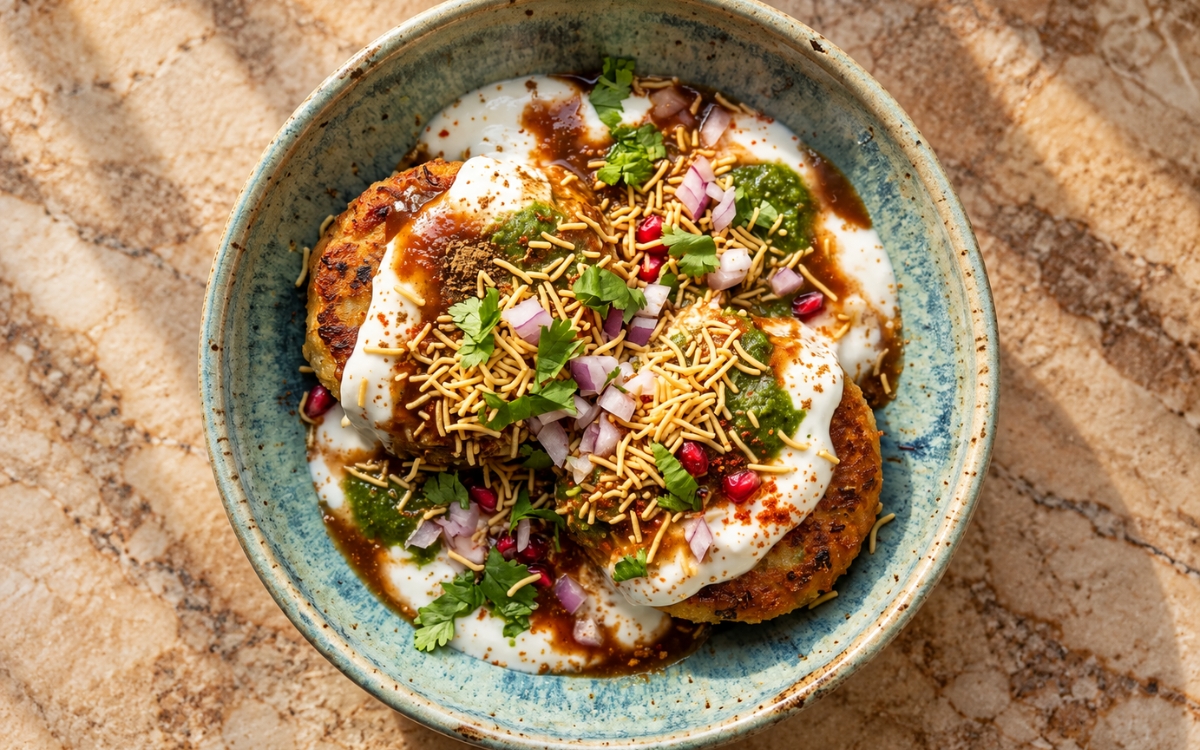
- Place 2 hot tikkis in each of 4 serving bowls or plates and press or crack them open slightly with a spoon so the toppings can settle into the surface. Spoon the yogurt over each serving, then drizzle with tamarind chutney, then dot with green chutney. Scatter over the 80–100g sev, the chopped red onion and the 3–4 tbsp chopped cilantro. Finish with the ½ tsp roasted cumin powder, the 1 tsp chaat masala, the ¼–½ tsp Kashmiri chilli powder and a pinch of black salt, divided between the plates, adding a few pomegranate arils only if desired. Serve immediately. That last-minute assembly is what preserves the contrast between crisp, hot tikki and cool, creamy toppings, since the tikkis soften and the sev turns limp within minutes.
Notes
Steam-drying the peeled potatoes before mashing deserves genuine recognition as the technique most directly responsible for whether the tikkis crisp or collapse in the pan. The recipe's own warning that "If the potatoes hold too much moisture, the tikkis will crack, stick, or soften instead of crisping" reflects simple physics — trapped water turns to steam against the hot fat, pushing the crust away before it can set.
Restraint with the cornstarch and breadcrumbs deserves the same attention this technique receives throughout this collection's other potato-based fried dishes, because binders genuinely decide the texture of the centre. A little starch firms the surface enough to brown and hold, while extra crumb soaks up the potato's moisture and turns the inside heavy, matching the recipe's own instruction that "The inside should stay soft and potato-forward, not dense or bready."
The patient first side in the pan deserves genuine respect as the detail most directly responsible for tikkis that turn over in one piece. Medium heat gives the starch on the surface 4–5 minutes to dry and fuse into a firm crust, whereas lower heat lets the patties absorb oil and higher heat burns the outside before it has properly crisped.
The consistency of the yogurt and both chutneys deserves attention as a genuine, checkable readiness cue rather than a loose approximation. Yogurt should flow slowly off a spoon, the green chutney should hold a soft mound and the tamarind chutney should coat a spoon lightly — "The chutney thickens more as it cools," so stopping early keeps every layer spoonable over the hot tikkis.