
Rose Hibiscus Mocktail
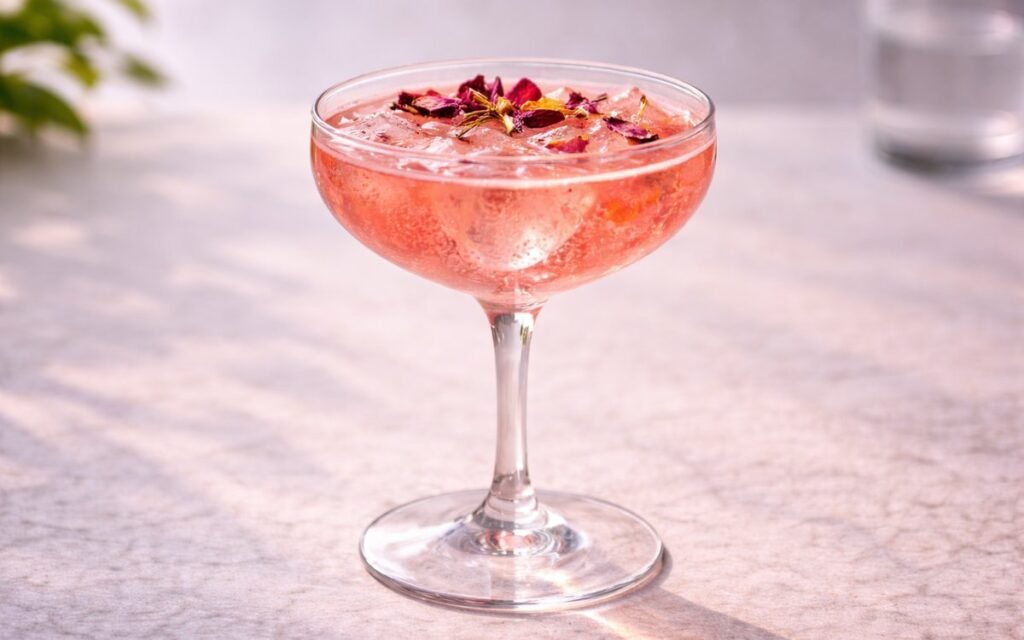
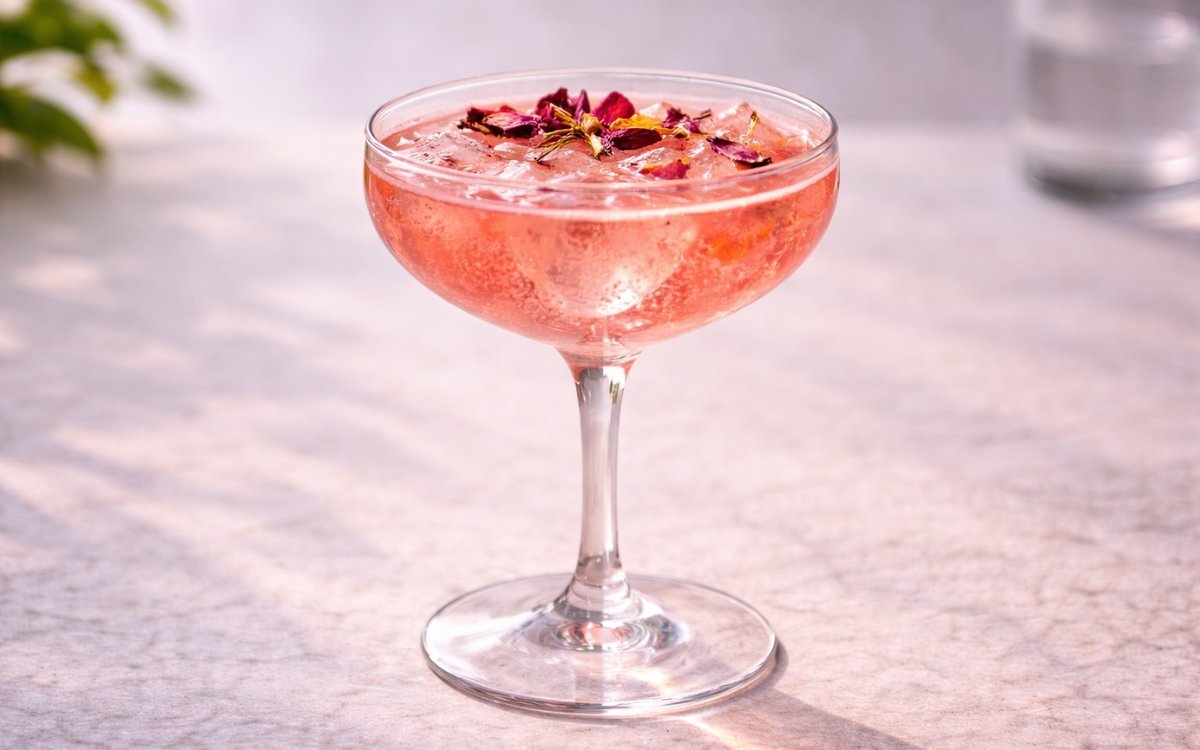
A refined floral mocktail built with a restrained hibiscus–rose extract, subtle orange peel aroma, fresh orange juice, and crisp club soda. Bright, lightly tart, and quietly elegant — floral without soap, structured without sugar.
Prep Time : 10 min
Cook Time : 10 min
Servings : 4
10 min
10 min
4
Ingredients
Hibiscus Rose Extract Syrup
• 2 Tbsp dried hibiscus flowers — this one on Amazon
• 1 Tbsp dried rose petals — this one on Amazon
• ½ cup (120 ml) water
• 1 strip orange peel (colored layer only, no white pith)
• 1½–2 Tbsp mild honey, to taste — this one on Amazon
• Pinch of fine sea salt
To Serve
• Ice
• Dried hibiscus flowers (optional)
• Dried rose petals (optional)
This post may contain affiliate links. As an Amazon Associate I earn from qualifying purchases, at no additional cost to you.
Directions
- Make the Floral Extract
In a small saucepan, combine the dried hibiscus, dried rose petals, water, and orange peel.
Bring to a gentle simmer over medium-low heat and cook for 6–8 minutes, just until deeply colored and aromatic.
Do not reduce or boil hard — concentration kills elegance. Strain through a fine-mesh sieve into a bowl or measuring jug. Discard solids. - Sweeten and Balance
While the extract is still warm, stir in 1½ tablespoons of honey until fully dissolved.
Add the pinch of fine sea salt and stir to dissolve.
Taste and add up to ½ tablespoon more honey only if needed. The syrup should be tart, floral, and dry — not sweet. Let cool completely. - Build the Mocktail
In a pitcher, combine 120–140 ml of the cooled hibiscus-rose syrup with the fresh orange juice.
Stir gently and taste. The base should be bright, lightly bitter-floral, and controlled. - Add the Fizz
Add plenty of ice to the pitcher.
Pour in the chilled club soda and stir gently once or twice to integrate without killing carbonation. - Serve
Pour into ice-filled glasses and garnish with a few dried hibiscus flowers and rose petals, if using.
*Notes :
- Hibiscus and rose are dangerous. These amounts are deliberate — don’t freestyle.
- Rose should be a whisper. If you can clearly identify it, you screwed up.
- Orange peel lifts florals without acidity — juice alone won’t do this.
- Honey controls edges, it does not sweeten. If it tastes sweet, you failed restraint.
- Salt must be invisible. If you taste it, start over.
- Serve immediately — florals fade fast once diluted.
Why This Mocktail Works
This mocktail is built on restraint. Hibiscus provides acidity and color, rose adds aroma without weight, orange juice bridges brightness with body, and club soda keeps the structure clean. The honey does not sweeten — it rounds sharp edges. The result is floral but not perfumed, tart but not aggressive, and refreshing without dilution.
Unlike overly sweet mocktails, this one behaves like a cocktail: layered, aromatic, and controlled.
Ingredient Breakdown
Dried Hibiscus Flowers
Hibiscus provides structure. It delivers tartness similar to cranberry but cleaner and more vibrant. Over-extraction turns it harsh and woody, which is why simmering must stay gentle.
Dried Rose Petals
Rose is aromatic, not flavorful. Its job is to create lift in the nose, not dominate the palate. Too much rose makes the drink taste soapy or dusty.
Orange Peel vs Orange Juice
Orange peel supplies aromatic oils without sweetness. Orange juice provides freshness and body. Using juice alone flattens the floral profile.
Honey
Honey smooths acidity and bitterness. It should not make the drink taste sweet — it should make it taste complete.
Club Soda
The soda provides structure and lift. High carbonation preserves elegance; flat soda ruins the texture.
Common Mistakes to Avoid
- Boiling the extract hard — destroys aroma and concentrates bitterness.
- Using too much rose — makes it taste perfumed.
- Oversweetening — this is not a lemonade.
- Adding soda too early — carbonation fades quickly.
- Serving warm — temperature affects floral perception heavily.
Variations
Sparkling Rosé Style (Non-Alcoholic)
Replace half the club soda with non-alcoholic sparkling rosé for added fruit depth.
Grapefruit Lift
Add 1–2 tablespoons fresh grapefruit juice to increase bitterness and complexity.
Herbal Twist
Infuse the syrup with a small sprig of fresh thyme during simmering for a subtle savory note.
Low-Acid Version
Reduce hibiscus slightly and increase orange juice for a softer, brunch-friendly profile.
Storage & Make-Ahead
The hibiscus-rose syrup can be made up to 3 days in advance and stored refrigerated in an airtight container. The aroma will slowly fade over time, so use fresh for peak elegance.
Never mix the full mocktail ahead of time. Carbonation and floral aromatics degrade quickly once diluted.
If preparing for guests, keep the syrup chilled and assemble per glass for maximum freshness.
Frequently Asked Questions
Can I use rose water instead of dried petals?
It is not recommended. Rose water is highly concentrated and can easily overpower the drink. If used, it must be measured in drops.
Can I replace honey with sugar?
Yes, but the flavor will be sharper. Honey provides roundness that granulated sugar does not.
Is hibiscus very sour?
Hibiscus is tart but not aggressive when properly extracted. Over-simmering increases harshness.
Can this be made into a cocktail?
Yes. A small amount of dry gin or vodka pairs well with the floral structure.
Nutrition Facts
( per ~200 ml serving )
Calories
~50 kcal
Protein
0 g
Fat
0 g
Carbs
~12 g
Calories
~50 kcal
Protein
0 g
Fat
0 g
Carbs
~12 g
Related Recipes
Related Recipes

Classic Iced Black Tea
Clean black tea chilled and lightly sweetened with honey, finished with a subtle lemon aromatic lift.
Virgin Mojito (Mocktail)
Fresh mint, bright lime, and lively bubbles deliver crisp structure with a subtle tart finish, unmistakably adult.
Piña Colada Mocktail
Creamy frozen pineapple and coconut with lime zest lift, smooth, tropical, and properly balanced without heaviness.
You might also like
You might also like
Lemon Peel Black Iced Tea (No Juice)
Crisp black tea driven by citrus peel aroma, lightly honeyed, salt-kissed, aromatic, and precisely restrained.
Raspberry Mojito Mocktail
Fresh berries with mint, lime, and verjus deliver sharp dryness, bright structure, and a confidently grown-up edge.
Basil Blueberry Sparkling Herbal Cooler
Sparkling white tea with basil-blueberry smash, softly fruity, herbal, clean, quietly structured botanical mocktail.

Rose Hibiscus Mocktail
Ingredients
Method
- In a small saucepan, combine the dried hibiscus, dried rose petals, water, and orange peel. Bring to a gentle simmer over medium-low heat and cook for 6–8 minutes, just until deeply colored and aromatic. Do not reduce or boil hard — concentration kills elegance. Strain through a fine-mesh sieve into a bowl or measuring jug. Discard solids.
- While the extract is still warm, stir in 1½ tablespoons of honey until fully dissolved. Add the pinch of fine sea salt and stir to dissolve. Taste and add up to ½ tablespoon more honey only if needed. The syrup should be tart, floral, and dry — not sweet. Let cool completely.
- In a pitcher, combine 120–140 ml of the cooled hibiscus-rose syrup with the fresh orange juice. Stir gently and taste. The base should be bright, lightly bitter-floral, and controlled.
- Add plenty of ice to the pitcher. Pour in the chilled club soda and stir gently once or twice to integrate without killing carbonation.
- Pour into ice-filled glasses and garnish with a few dried hibiscus flowers and rose petals, if using.
Notes
- Hibiscus and rose are dangerous. These amounts are deliberate — don’t freestyle.
- Rose should be a whisper. If you can clearly identify it, you screwed up.
- Orange peel lifts florals without acidity — juice alone won’t do this.
- Honey controls edges, it does not sweeten. If it tastes sweet, you failed restraint.
- Salt must be invisible. If you taste it, start over.
- Serve immediately — florals fade fast once diluted.